

Are you nuts to eat them? Legumes, nuts & seeds in Inflammatory Bowel Disease


Legumes and nuts and seeds…oh my! For some living with Inflammatory Bowel Disease, these nutritious staples can be as scary as lions and tigers and bears. But why?
There are a couple main reasons. First, many people with Crohn’s or ulcerative colitis find that they react poorly to some or all of these foods. Second, for many years, it was common to prescribe a low-residue diet for IBD patients long-term. The thinking went that fibrous foods would irritate an already inflamed intestine.1
Although low-residue diets are still sometimes recommended short-term and in certain cases (always check with your GI team) they are much less common in recent years. This is because there is little evidence that a low-residue or low-fiber diet helps2 and growing evidence in favor of Nutrition Therapies (SCD, IBD-AID, AIP, CDED, etc) that include fiber containing foods in various textures and types.
One key way fibrous foods may help is through reducing inflammation3 and prolonging remission.4 This may be due to fiber’s role in increasing both microbial diversity and the amount of protective small chain fatty acids in the colon.3 An exciting area of current research is looking into which fiber types — soluble vs. insoluble and fermentable vs. non-fermentable — produce these beneficial effects. To learn more about the interactions between IBD and the microbiome, check out my article on Gut Health and Immunity.
If you’ve responded poorly to some fibrous foods in the past, it may be more to do with the type of fiber and the state of your particular microbiome than the presence of residue.2 Instead of a low residue diet, today’s healthcare professionals often recommend modifying the consistency of fibrous foods. In short, you may be able to reap the benefits of fiber-rich foods if you’re open to experimenting with different types and forms.
So this brings us to some of the most nutrient dense fibrous foods — legumes, nuts and seeds. Are you nuts to eat them if you have IBD? As an IBD nutritionist, I generally say that it’s a great idea to consume them — that is IF you tolerate them…and there are ways to increase tolerability, so read on!
The benefits of consuming nuts, seeds and legumes, even if you have IBD
Let’s start with the pros.
I’m grouping legumes, nuts and seeds together because they’re technically all seeds of one type or another and they have a lot of similarities that are relevant to nutrition in IBD.
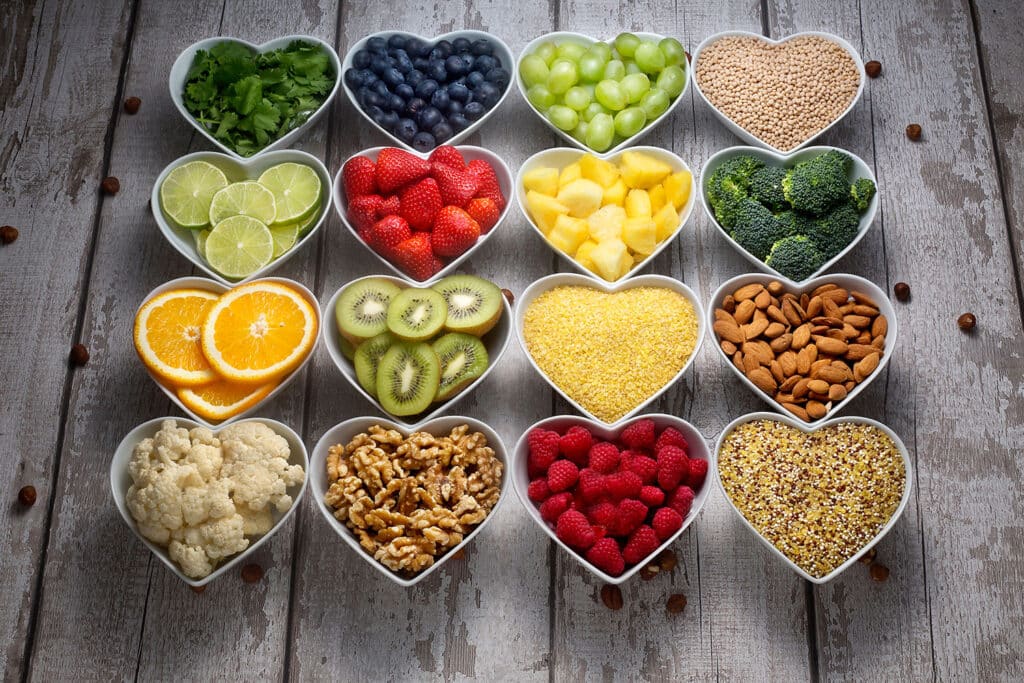
As a group, these are packed with nutrition, tasty, and often affordable, as in the case of beans and lentils. They tend to be rich in protein, healthy fats, and offer micronutrients including B vitamins, tocopherols, and minerals including calcium, magnesium and potassium.5 6 They also contain iron, but it’s less bioavailable due to compounds that interfere with absorption. More on that in a bit.
As I’ve mentioned, nuts, legumes and seeds are packed with prebiotic fiber, which help improve the health of the colon.7 They are also known to possess anti-inflammatory properties through the presence of antioxidants, fiber and omega-3s.


The cons of eating legumes, seeds and nuts when you have IBD
On the other hand, as anyone who has ever overdone it on the beans will tell you, they’re not for everyone in all situations! But, all jokes aside, there are some factors that concern me as an IBD nutritionist.
First, some patients who have stricturing disease, an ostomy or pouch may need to avoid, limit or modify the texture of high residue/fiber foods to reduce the risk of a blockage depending on their particular situation.
Second, legumes, nuts and seeds all tend to be high in antinutrients. These are compounds plants use for defense and other functions that happen to interfere with our digestion and absorption, making it harder to extract nutrients from the foods we eat. The term antinutrients comes from concerns about whether they are beneficial or not.8 Typically, reduced absorption from antinutrients is not a significant problem in standard western diets given the high intake of meat and variety of food groups consumed. However, antinutrients can play a role in anemia and other nutrient deficiencies in the presence of malnutrition, an unbalanced diet (like a poorly designed vegan diet), or severe malabsorption – as can be the case in severe, active IBD.
Common antinutrients and the IBD Diet
A few antinutrients in nuts, seeds and legumes include phytic acid, lectins, and tannins.
Phytic acid is a substance plants use to store phosphorus. Humans are unable to metabolize phytic acid, and it decreases calcium, iron and zinc absorption,9 making mineral-rich foods effectively mineral poor.10 It’s a contributor to micronutrient deficiencies throughout the world, particularly in developing countries that depend on grains and legumes as food staples.11 Typically, if you’re consuming animal foods, it will compensate, but not always in the case of active Crohn’s or ulcerative colitis. Phytate may also possess antioxidant properties. More research is needed in this area.
Lectins are plant defense proteins found in many foods, which are especially concentrated in legumes. In their active state, they bind to carbohydrates, can stick to cells inhibiting digestion, and may trigger inflammation. They’re the reason you can get sick from eating uncooked kidney beans. In fact, the highly potent poison ricin is a lectin that comes from castor beans.
Lectins can interfere with nutrient absorption.12 Clinical human trials of lectin administration are limited, but some research looking at raw legume flour showed adverse effects in animal models. In contrast, there is evidence to show that lectins possess therapeutic benefits when cooked well.13
A few decades ago, researchers raised concerns about lectins and they were popularized as a potential driver for many diseases, but not much research has come to light on this since.
Tannins are a group of bitter and astringent compounds made famous by wine, but also found in nuts, legumes and seeds. Although they have benefits, they also are termed antinutrients. For instance, legume tannins deactivate digestive enzymes, decrease protein availability, and reduce iron absorption.14
It is difficult to tease out the effects of these specific food components as they are never consumed in isolation; instead we enjoy them together with hundreds and hundreds of other beneficial bioactive food components that also impact absorption.
Should IBD patients avoid nuts, seeds and legumes because of their antinutrients?
You may be tempted to empty your pantry and stick with roast beef. But hear me out.
Antinutrients aren’t indestructible. In fact, they can be largely deactivated with specific preparation methods. For instance, phytic acid can be reduced with milling, soaking, fermenting and sprouting.15 Soaking and cooking deactivate much of the lectins in legumes, which is why the well-cooked kidney beans in your Super Bowl chili don’t ruin your celebration.16
In addition, there can be benefits to these compounds. For example, lectins from legumes have been found to have anti-inflammatory effects in some cases.17 They’ve also been proposed as a mechanism to reduce intestinal atrophy during total parenteral nutrition (TPN) because they stimulate cell growth in rat models.18 Diets high in lectin-rich foods are associated with reduced inflammatory markers in both human and animal trials.
Tannins are famous for their antioxidant effects that may ward off cancer and improve cardiovascular outcomes.19
How to reduce antinutrients when eating legumes, seeds and nuts
You don’t have to give up on health-giving nuts, seeds and legumes when you have IBD. Here are some suggestions to reduce any potential ill effects and increase nutrient absorption:
- Avoid eating nuts, seeds and legumes raw. Especially legumes, which can be actively toxic. They taste terrible and there’s a reason for it!
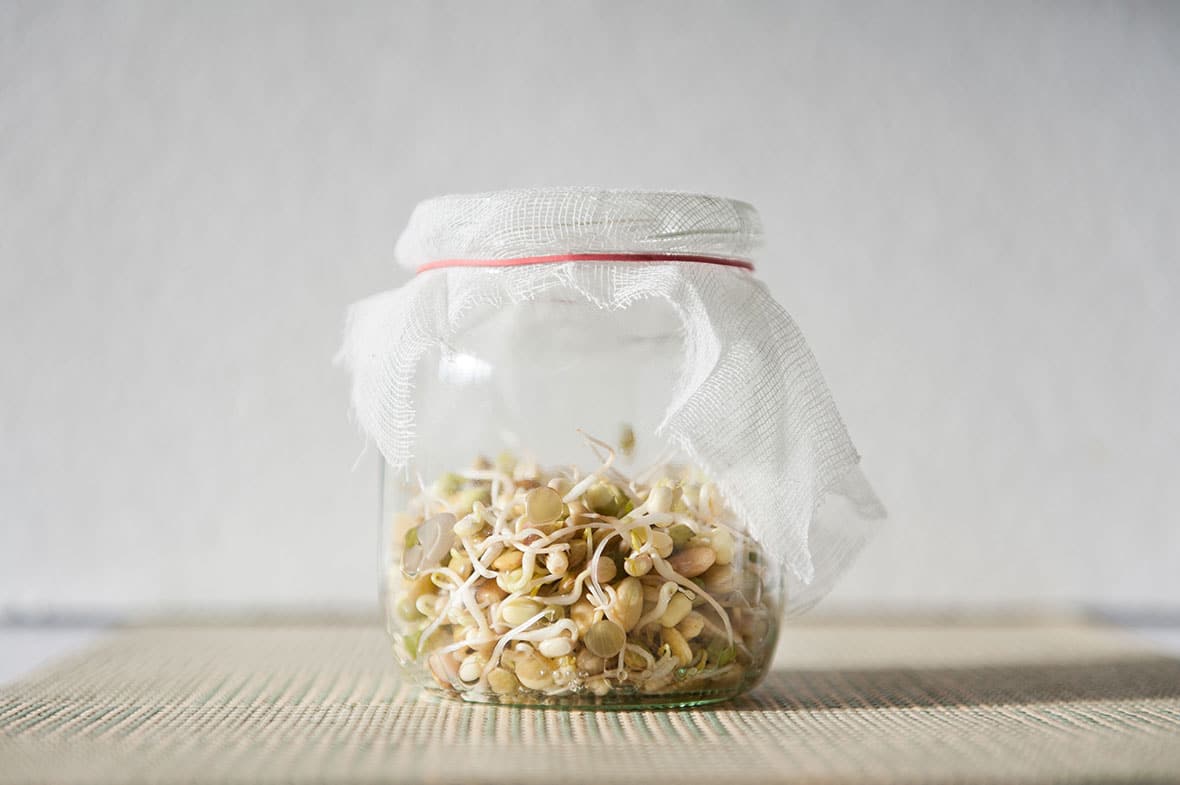
- Always keep in mind that soaking, fermenting, germinating and cooking can significantly break down or inactivate phytic acid and lectins.
- Soaking legumes for 8-12 hours before cooking with a little baking soda can reduce gas and bloating.
- Cook them well. No al dente when it comes to beans and lentils.
- Sprouting legumes, such as lentils, neutralizes phytic acid and degrades antinutrients. You can purchase lentils that are pre-sprouted and dried such as TruRoots brand Organic Sprouted Green Lentils. You can cook these in your favorite lentil dishes, or grind and use them for lentil flour. A bonus with sprouted legumes is the nutrient benefit, because sprouting increases vitamin and mineral bioavailability (absorbability). If you’re sprouting your legumes at home, I recommend using lentils or beans that are organic and certified (pathogen free), then cooking them once sprouted to reduce the risk of foodborne illness. Cooking kills any potentially harmful bacteria.
- Go ahead and use canned beans! They’re precooked and some of the lectins have broken down. Plus, they make life easier when you forget to soak. You can always boil canned beans for a few minutes if al dente. Look for options ideally that do not contain food additives.
- Pay attention to your individual tolerance. If you get uncomfortable symptoms like bloating or cramping, you may be having trouble digesting FODMAPs, which are short chain sugars found in beans and some nuts. Try cutting back on amounts, trialing Beano, or checking with your nutritionist for help.
- Before writing legumes off all together, try modifying the texture. Find pasta made from nut, bean or lentil flours. Add a little nut flour in your baking. Or puree beans or chickpeas into dips or hummus. You can even whirr them into your smoothie if you’re feeling bold!
- Start with a small quantity and increase with time. Most individuals have a tolerance threshold — whether or not they have IBD
What if you’re on IBD Nutrition Therapy?
Many people that I see are following Nutrition Therapies such as the Specific Carbohydrate Diet (SCD), the Crohn’s Disease Exclusion Diet (CDED) or the IBD Anti-Inflammatory Diet (IBD-AID). One of the most common confusions I hear is whether beans and lentils need to be soaked. The short answer is, not always, although there are benefits to soaking as mentioned above. Here’s more:
- All Nutrition Therapies presume beans or lentils are cooked!
- SCD requires that you soak beans for 10-12 hours prior to cooking. Consume as tolerated.
- However, other diet therapies do not mandate soaking.
- IBD-AID recommends that you vary the texture, depending on the stage, and use digestive enzymes, if needed, prior to eating. Consume as tolerated.
- The CDED guidelines allow beans/legumes:
- After 6 weeks, you can consume cooked from up to ½ cup dry each day
- During maintenance, you can have cooked from up to 1 ½ cups dry per day
What about nuts and seeds?
- The SCD includes all nuts as tolerated, but excludes flax, chia and hemp seeds
- The IBD-AID includes nuts and seeds in tolerated amounts
- The CDED includes walnuts and almonds up to 8 per day after week 6
Have I planted some seeds?
So there you have it! In most cases, nuts, legumes and seeds can be a healthy and supportive part of the diet for individuals with IBD. So, if you’re interested in introducing or reintroducing them, you might give them a try. Happy soaking, happy sprouting, and bring on the bean dip!
- Shah, N. D. (2015). Low residue vs. low fiber diets in inflammatory bowel disease: evidence to support vs. habit?. Practical Gastroenterology, 39(7), 48-57.[↩]
- Ibid.[↩][↩]
- Armstrong, H., Mander, I., Zhang, Z., Armstrong, D., & Wine, E. (2021). Not All Fibers Are Born Equal; Variable Response to Dietary Fiber Subtypes in IBD. Frontiers in Pediatrics, 8, 620189.[↩][↩]
- Pituch-Zdanowska, A., Banaszkiewicz, A., & Albrecht, P. (2015). The role of dietary fibre in inflammatory bowel disease. Gastroenterology Review/Przegląd Gastroenterologiczny, 10(3), 135-141.[↩]
- Ros, E. (2010). Health benefits of nut consumption. Nutrients, 2(7), 652-682.[↩]
- Link[↩]
- Sasson, A. N., Ingram, R. J., Zhang, Z., Taylor, L. M., Ananthakrishnan, A. N., Kaplan, G. G., … & Raman, M. (2021). The role of precision nutrition in the modulation of microbial composition and function in people with inflammatory bowel disease. The Lancet Gastroenterology & Hepatology, 6(9), 754-769.[↩]
- Petroski, W., & Minich, D. M. (2020). Is there such a thing as “anti-nutrients”? A narrative review of perceived problematic plant compounds. Nutrients, 12(10), 2929.[↩]
- Gropper SS, Smith JL, Carr TP. Advanced Nutrition and Human Metabolism. 7th ed. Wadsworth Publishing; 2018.[↩]
- Sandberg, A. S. (2002). Bioavailability of minerals in legumes. British Journal of nutrition, 88(S3), 281-285.[↩]
- Gupta, R. K., Gangoliya, S. S., & Singh, N. K. (2015). Reduction of phytic acid and enhancement of bioavailable micronutrients in food grains. Journal of food science and technology, 52(2), 676-684.[↩]
- Link[↩]
- Petroski, W., & Minich, D. M. (2020). Is there such a thing as “anti-nutrients”? A narrative review of perceived problematic plant compounds. Nutrients, 12(10), 2929.[↩]
- Reddy, N. R., Pierson, M. D., Sathe, S. K., & Salunkhe, D. K. (1985). Dry bean tannins: a review of nutritional implications. Journal of the American Oil Chemists Society, 62(3), 541-549.[↩]
- Gupta, R. K., Gangoliya, S. S., & Singh, N. K. (2015). Reduction of phytic acid and enhancement of bioavailable micronutrients in food grains. Journal of food science and technology, 52(2), 676-684.[↩]
- Adamcová, A., Laursen, K. H., & Ballin, N. Z. (2021). Lectin Activity in Commonly Consumed Plant-Based Foods: Calling for Method Harmonization and Risk Assessment. Foods, 10(11), 2796.[↩]
- Zhu, F., Du, B., & Xu, B. (2018). Anti-inflammatory effects of phytochemicals from fruits, vegetables, and food legumes: A review. Critical reviews in food science and nutrition, 58(8), 1260-1270.[↩]
- Jordinson, M., Goodlad, R. A., Brynes, A., Bliss, P., Ghatei, M. A., Bloom, S. R., … & Calam, J. (1999). Gastrointestinal responses to a panel of lectins in rats maintained on total parenteral nutrition. American Journal of Physiology-Gastrointestinal and Liver Physiology, 276(5), G1235-G1242.[↩]
- Delimont, N. M., Haub, M. D., & Lindshield, B. L. (2017). The impact of tannin consumption on iron bioavailability and status: A narrative review. Current developments in nutrition, 1(2), 1-12.[↩]
1 Comment
Leave a Comment

Hi! I'm Kim Braly, RD, a clinical researcher and IBD Nutrition Consultant. I specialize in cutting-edge dietary therapies for inflammatory bowel disease that have been shown in multicenter trials to decrease inflammation, alleviate IBD symptoms and induce remission. I'm passionate about offering this effective new option to patients and their families with my 3D-Dietary™ Approach for IBD and helping to usher in a new era of IBD treatment through mentoring and research trial consultation. Let's see what diet can do for you.
ABOUT


FOR PATIENTS
Flares Happen!
You can't always put your life on hold when IBD rears its head, but you can make this your easiest flare yet. My proven diet and lifestyle tips support your gut, body, mind & emotions for a faster recovery and a longer remission.
FOR PARENTS
Is Your Child’s Weight Dropping Fast?
You don't have to stand helpless during an IBD flare. Feed your child foods proven to minimize triggers, calm inflammation, and repair the gut. Get them healing and growing!
Hi, my 3 year old as had digeative problems since 6 months. Weve tried eliminating foods and told he has a salicylate intolerance but he reacts to so many other foods without this in it. Im going down the crohns route as his problems seem to mirror this and so im confused whether nits or good or bot. He curtently only eats cashew nuts and butter