

Is all Dairy Created Equal? Dairy and IBD


Dairy is a hotly debated topic, and more so if you have Inflammatory Bowel Disease. Should you eat it? And what should healthcare professionals recommend?
I have had many passionate debates with dear colleagues about dairy. Ask five gastroenterologists for their thoughts on dairy products and you will likely get five different answers (I’ve tried!). Ask a pediatrician and a cardiologist and you’ll get two new answers.
Needless to say, dairy is controversial for people inside and outside of healthcare. Even the expert body charged with dietary recommendations for IBD was unable to reach a consensus on dairy in the 2020 published IOIBD guidelines.
As an RD who works with both IBD patients and professionals, I’m asked about dairy all the time. While there aren’t straightforward answers for every situation, the purpose of this article is to bring some evidence-based clarity to the confusion around cow’s milk avoidance and IBD. So let’s whey in!
Dairy Consumption in IBD
Even though it’s estimated that about 36% of US adults are lactose intolerant, surveys put the number of adults who fully abstain from dairy at fairly low 5-6%.1
For those with IBD, the percentage who avoid dairy is much higher. Those who work with the IBD population know that a significant portion choose to exclude certain foods like gluten, legumes and dairy. In one (non US) survey of those with Crohn’s or ulcerative colitis, it was found that 58% cut at least one type of dairy to try to avoid worsening their symptoms.2 Another recent study found that 33-40% of those with IBD avoided lactose.3 Based on a recent meta analysis, we also know that dairy intake in all subgroups of adults with IBD falls well short of recommended guidelines, although we don’t know all the reasons behind this and it may involve poor overall diet quality.4
Lactose intolerance is higher in those with Crohn’s disease and ulcerative colitis than in healthy controls, at about 40%–50% in CD and 27%–40% in UC.5 In children, the numbers are lower, at about 23.2% of children with UC and 22.6% with CD.3 By some measures, though, the rates of lactose intolerance in IBD may actually reach 70%,3
In my clinical experience, I find some people with IBD exclude dairy because they’ve found it increases their symptoms. For others, their decision may be based on advice from healthcare professionals, authors, peers, and social media, even in the absence of any symptoms.
Breaking Down Dairy
We sometimes talk about dairy as a monolithic group, but we’re really talking about foods that vary in how they’re produced and what they contain. As you know, the main players in the US diet are milk, cheese, yogurt and butter. Milk contains all of the following, which will vary in percentages in other dairy products:
- Casein: 80% of the protein in milk is casein, and it is most concentrated in cheese.
- Whey: Whey is the watery part of milk that’s left when casein is curdled and removed. It contains whey protein, which makes up the other 20% of protein content in milk.
- Milkfat: Also known as butterfat, this is the fatty portion of milk, at about 3.5%. It’s what’s skimmed off as cream and churned into butter.
- Lactose: This is the primary carbohydrate in milk (both human and other animals). It is a double sugar made from one glucose and one galactose molecule, which needs to be split apart to be digested. To do this, the small intestine produces the enzyme lactase in the cells of the small intestine.
So, IS All Dairy Equal?
Definitely not — because milk is processed into so many different dairy foods, dairy varies in ways that can be relevant for IBD symptoms.
Composition – Different forms of dairy contain more or less of the four main components above. Because people can have digestive symptoms from different components of dairy, the amounts they contain matter.
For example, hard cheeses will have almost no lactose, meaning that they are unlikely to trigger symptoms of lactose intolerance. Similarly, yogurt fermented for 24 hours, as recommended on the SCD diet for example, will have nearly all lactose removed, while containing beneficial probiotics.
In terms of milkfat, those who struggle with fat malabsorption may do better with low or nonfat forms of dairy products.
Fermentation – Most people know that yogurt is a fermented food, but do you know that aged cheeses like cheddar and parmesan (which are more heavily consumed in the the US than yogurt) are also fermented and some forms contain live and active cultures?6 This is relevant because there is growing evidence that fermented foods may favorably affect the gut microbiome and impact gut microbiota diversity .7 8 Given that US consumption of other fermented foods like kimchi, kefir and sauerkraut is much lower, dairy can be important for delivering fermented foods’ benefits.
Processing – Almost no one gets farm-fresh milk delivered in glass jars anymore. Most dairy has gone through at least some processing to reach the consumer, and many milk beverages, yogurts, and ice creams may contain additives like preservatives, emulsifiers, colors and stabilizers. Because we have evidence to suggest that food additives are linked to intestinal inflammation, those with and without IBD may want to choose products with no additives and minimal processing.
What Official Guidelines Say About Dairy in IBD
As I mentioned earlier, in 2020, the International Organization for the Study of Inflammatory Bowel Disease (IOIBD) was able to achieve consensus on food types evaluated except pasteurized dairy.9 They said dairy’s varied composition and frequent additives complicated the picture, and that scientific evidence showing that dairy affects IBD is lacking. They did recommend avoiding unpasteurized dairy products and limiting dairy that has additives or is high in fat. These guidelines were not specific to the pediatric population. The lack of consensus is understandable, but it does put the burden on individuals and their healthcare providers to make their own determinations about dairy.
What IBD Diets Say About Dairy
Various evidence-based nutrition therapies for IBD allow fermented forms of dairy, but not all of them. Those that do include the IBD-Anti Inflammatory Diet (IBD-AID), the Crohn’s Disease Exclusion Diet (CDED), and the Specific Carbohydrate Diet (SCD).
None of these diets include unfermented dairy. This is likely based on controversy and insufficient research on topics noted above rather than conclusive evidence showing harms from unfermented dairy.
While we have evidence that these diets help some people with IBD, it’s possible that the effects are unrelated to whether they allow or exclude dairy.
Reasons to be Cautious of Dairy in IBD
You may be guessing by now that I can’t give you a hard and fast rule about whether dairy is right for IBD. But I’d like to start with ideas on when to be careful, and then follow up with reasons to hold onto dairy where possible.
- Additives and Inflammation: Because food additives may contribute to intestinal inflammation in IBD, the 2020 IOIBD Guidelines recommend limiting dairy containing maltodextrins and emulsifiers.5
- Lactose Intolerance: As I mentioned before, lactose intolerance is prevalent in those with IBD. Lactose intolerance may be related to transient lactase deficiency that will improve once inflammation has been treated. If lactose intolerance persists, then a low-lactose diet may be needed. Lactose intolerance can also appear after gastrointestinal surgery such as resection, colectomy or pouch.
- Symptom Trigger: Cow’s milk dairy is a commonly reported trigger during periods of inflammation. There are also potentially overlapping issues linked to cow’s milk dairy such as skin breakouts and joint pain. Removing it temporarily during a flare may be helpful with symptom control. But please don’t remove it altogether if it is tolerated.
- Constipation: Dairy can be constipating, especially when it displaces other nutrient dense, high fiber foods. This is especially true for kids who drink a lot of milk. In this case, increasing dietary fiber and reducing, but not eliminating, dairy can help.
- Ethics: I believe there is reason for pause about growth hormones and antibiotic resistance from conventional dairy as well as important ethical considerations around factory farming. Even in IBD, where we have to be extra mindful with nutrition, there is room for personal and environmental ethics. If you avoid dairy on ethical grounds, it may be worth locating a dairy producer with practices you can support. Or you might work with an IBD dietitian to create an optimal dairy-free diet that supports your values, goals and ensures nutrition adequacy.
Potential Benefits of Dairy in IBD
Dairy in certain forms offers high quality nutrition that can be helpful in IBD and for overall health.
- Calcium and Vitamin D: Dairy is a valuable source of both calcium and vitamin D. In the United States, dairy products (and foods with added dairy ingredients) provide up to 72% of calcium intake. Intake of calcium and vitamin D is known to be frequently inadequate in the IBD population for reasons mentioned above. This is an especially important consideration in developing children with IBD considering the risk for low bone mineral density. The current European Society for Clinical Nutrition and Metabolism (ESPEN) guidelines are clear that people with IBD should not be told to eliminate dairy for this reason; they should instead choose low-lactose options if lactose deficiency or intolerance is suspected.10
Yes, you can get vitamin D from the sun for part of the year, depending on your latitude, but most people need additional dietary sources and fortified foods to get enough. And, yes, there are other sources of calcium, and you can absolutely meet your calcium needs from non-dairy sources. However, my experience in the pediatric IBD population as well as studies on dietary intakes show that most people in the U.S. do not eat enough leafy greens, soybeans/legumes, or bone-in-sardines to do so. We’re just not accustomed to cooking or using these ingredients. Also, these alternative calcium sources are oftentimes excluded from IBD patient’s diets during active inflammation because of their high fiber content. Fortified plant milks exist, but they frequently contain food additives. Additionally, they are often higher in sugar, lower in fats, and can be quite a bit more expensive. - Cultured and Fermented Foods: Yogurt and fermented dairy are great sources of live and active cultures that can positively impact the gut microbiome. Fermented foods have a wide array of health benefits that touch on IBD, including improving the microbial diversity of the microbiome, potentially lowering inflammation,8 and fermented milk consumption has been linked to symptom improvement in IBD.11
- Most People Like Dairy: Dairy products provide joy and can be one of the main sources of protein and calcium many children (and adults) will eat. If it’s not making your or your child’s symptoms worse, then it’s not necessary to cut out.
More Food for Thought
Earlier, I gave a list of reasons I often hear for why people with IBD avoid dairy. The one I didn’t cover yet was fear. Not a fear of symptoms, but an overall fear that dairy is bad for you. While there are certainly important issues with milk production and processing that could be improved, there is currently no smoking gun or large body of evidence implicating dairy in IBD or other major illnesses. Because of its superior nutrition, dairy is considered its own food group by most government guidelines around the world, and it’s near uniformly recommended at 1-5 servings per day.12 So what is causing this fear?
I would argue that some of it is because of the growing profitability of dairy alternatives. Today’s plant-based milk industry is worth over $2.6 billion in the US and over $13 billion worldwide. This is growing rapidly, too. In order to convey the benefits of plant-based dairy (and there are benefits), marketers must differentiate plant-based options from dairy — meaning they have to say or imply that dairy is a problem that plant-based alternatives can solve.
One place where this is easy to see is in terms of saturated fat. Plant-based dairy promotes itself as low in saturated fat, a benefit which relies on the public belief that saturated fat from dairy contributes to conditions like metabolic and heart disease. I’d love to address this at a later time, but for now, I want to say that recent studies are suggesting that full fat dairy does not worsen these conditions13 14 and in fact may protect against them, but this news hasn’t necessarily broken through the “fat is bad” long standing messaging.
Kim’s Recommendations
This might be an unpopular opinion, but, based on the evidence and my clinical experience, I say if you enjoy and can tolerate dairy, go ahead and eat it! Just make sure you do so in the context of a whole foods eating pattern that is appropriate for you and the current state of your IBD.
Here are a few guidelines that might help:
- Prioritize dairy without food additives including emulsifiers, thickening agents, varying sweeteners such as maltodextrins.
- Choose full-fat to help with satiety, blood glucose balance, and weight maintenance. Or use it for weight gain when needed, especially in children. Always listen to your provider for your situation.
- Try to include fermented dairy if you like it. It’s okay to enjoy some daily unless your healthcare team has advised otherwise.
- If you prefer plant-based alternatives, choose those! Options without additives DO exist; you just have to be a label sleuth, and they aren’t always fortified. Elmhurst plant milks like Elmhurst Milked Almonds are one delicious option.
- If you are symptomatic and find that dairy worsens your symptoms, avoid it temporarily and then try carefully reintroducing low lactose options first when your symptoms resolve.
- If you experience persistent lactose intolerance, choose low or no-lactose foods, or try a lactase product.
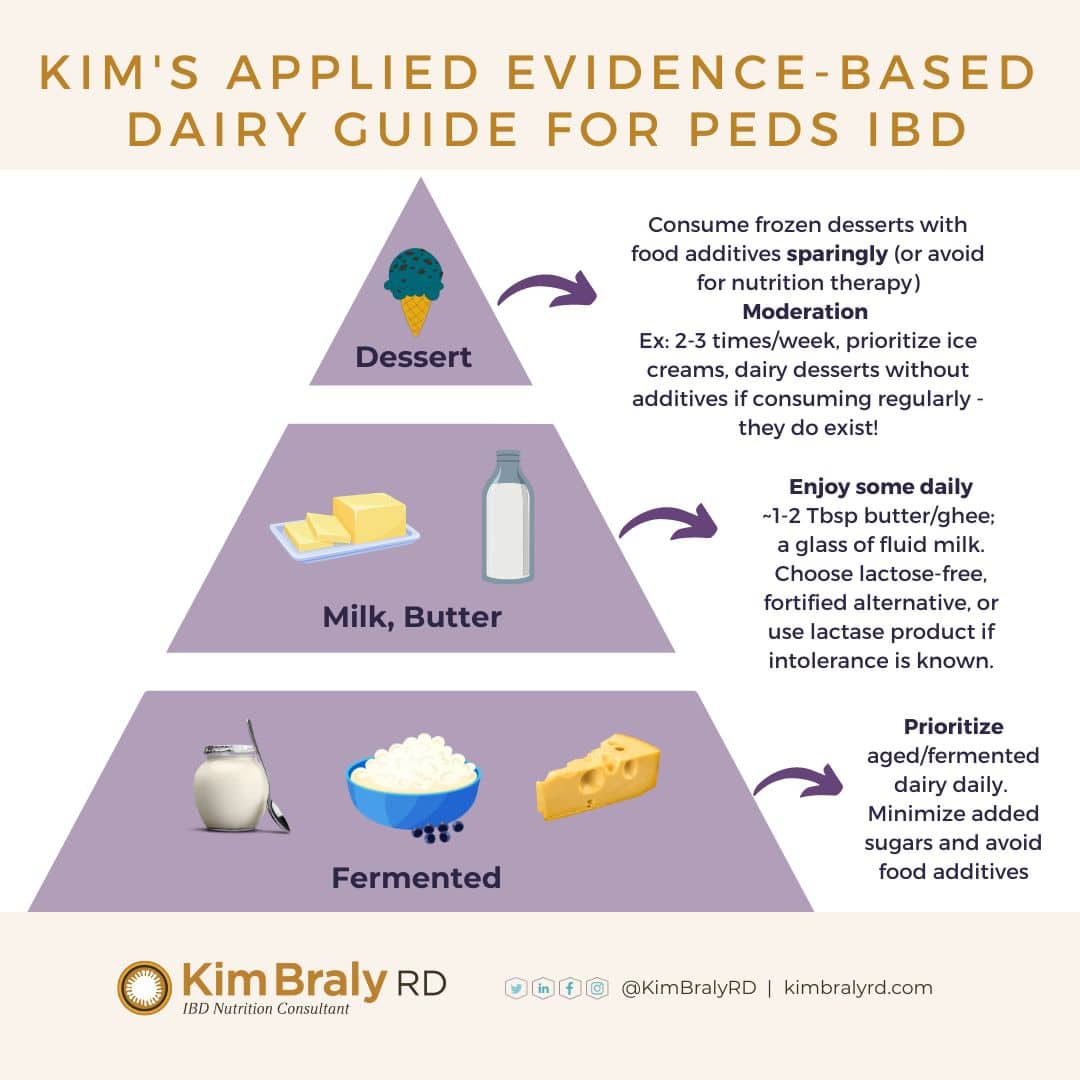
Here are some of my favorite low-lactose dairy snacks that also support your gut microbiome health:
- Yogurt with live and active cultures + lightly sweetened granola. Bonus if you can find or make a yogurt that has been fermented for up to 24 hours! Or use yogurt as the base to make a savory tzatziki dressing.
- Aged Cheeses (hello gouda, cheddar, brie!). Need I say more?
- Kefir — Drink as is, or add it to a smoothie.
- Cottage cheese with live and active cultures + berries or sliced peaches. This is an excellent high-protein snack.
So there you have it. If you’re a dairy lover who gave it up out of abundant caution for your IBD, I hope you’ve seen that there are good reasons to try again. Always check with your healthcare team and start slowly with low-lactose fermented foods. Work your way up until you can have an ice cream to celebrate. Cheers!
This information (including but not limited to text, graphics, images, videos, and other material) is for informational purposes only. The information provided is not intended to be a substitute for professional medical advice, diagnosis or treatment and should not be used to replace professional medical oversight and recommendations.
If you have any concerns or questions about you or your child’s health, you should always consult with your healthcare provider.
- In 2022 5% of surveyed consumers said they buy only plant-based dairy alternatives vs. dairy or a mix of dairy and plant-based. The National Health and Nutrition Examination Survey found that, on any given day, 6.2% of U.S. adults consumed no dairy.[↩]
- Larussa, T., Suraci, E., Marasco, R., Imeneo, M., Abenavoli, L., & Luzza, F. (2019). Self-prescribed dietary restrictions are common in inflammatory bowel disease patients and are associated with low bone mineralization. Medicina, 55(8), 507.[↩]
- Ratajczak, A. E., Rychter, A. M., Zawada, A., Dobrowolska, A., & Krela-Kaźmierczak, I. (2021). Lactose intolerance in patients with inflammatory bowel diseases and dietary management in prevention of osteoporosis. Nutrition, 82, 111043.[↩][↩][↩]
- Lambert, K., Pappas, D., Miglioretto, C., Javadpour, A., Reveley, H., Frank, L., Grimm, M. C., Samocha-Bonet, D., & Hold, G. L. (2021). Systematic review with meta-analysis: dietary intake in adults with inflammatory bowel disease. Alimentary pharmacology & therapeutics, 54(6), 742–754. https://doi.org/10.1111/apt.16549[↩]
- Levine, A., Rhodes, J. M., Lindsay, J. O., Abreu, M. T., Kamm, M. A., Gibson, P. R., … & Lewis, J. D. (2020). Dietary guidance from the international organization for the study of inflammatory bowel diseases. Clinical Gastroenterology and Hepatology, 18(6), 1381-1392.[↩][↩]
- Rezac, S., Kok, C. R., Heermann, M., & Hutkins, R. (2018). Fermented foods as a dietary source of live organisms. Frontiers in microbiology, 9, 1785.[↩]
- Stiemsma, L. T., Nakamura, R. E., Nguyen, J. G., & Michels, K. B. (2020). Does Consumption of Fermented Foods Modify the Human Gut Microbiota?. The Journal of nutrition, 150(7), 1680–1692. https://doi.org/10.1093/jn/nxaa077[↩]
- Wastyk, H. C., Fragiadakis, G. K., Perelman, D., Dahan, D., Merrill, B. D., Feiqiao, B. Y., … & Sonnenburg, J. L. (2021). Gut-microbiota-targeted diets modulate human immune status. Cell, 184(16), 4137-4153.[↩][↩]
- Levine, A., Rhodes, J. M., Lindsay, J. O., Abreu, M. T., Kamm, M. A., Gibson, P. R., … & Lewis, J. D. (2020). Dietary guidance from the international organization for the study of inflammatory bowel diseases. Clinical Gastroenterology and Hepatology, 18(6), 1381-1392.[↩]
- Miele, E., Shamir, R., Aloi, M., Assa, A., Braegger, C., Bronsky, J., … & Staiano, A. (2018). Nutrition in pediatric inflammatory bowel disease: a position paper on behalf of the Porto Inflammatory Bowel Disease Group of the European Society of PediatricGastroenterology, Hepatology and Nutrition. Journal of pediatric gastroenterology and nutrition, 66(4), 687-708.[↩]
- Stiemsma, L. T., Nakamura, R. E., Nguyen, J. G., & Michels, K. B. (2020). Does consumption of fermented foods modify the human gut microbiota?. The Journal of nutrition, 150(7), 1680-1692.[↩]
- Comerford, K. B., Miller, G. D., Boileau, A. C., Masiello Schuette, S. N., Giddens, J. C., & Brown, K. A. (2021). Global review of dairy recommendations in food-based dietary guidelines. Frontiers in nutrition, 8, 671999.[↩]
- Schmidt, K. A., Cromer, G., Burhans, M. S., Kuzma, J. N., Hagman, D. K., Fernando, I., … & Kratz, M. (2021). Impact of low-fat and full-fat dairy foods on fasting lipid profile and blood pressure: exploratory endpoints of a randomized controlled trial. The American Journal of Clinical Nutrition, 114(3), 882-892.[↩]
- Mitri, J., Tomah, S., Mottalib, A., Salsberg, V., Ashrafzadeh, S., Pober, D. M., … & Hamdy, O. (2020). Effect of dairy consumption and its fat content on glycemic control and cardiovascular disease risk factors in patients with type 2 diabetes: A randomized controlled study. The American journal of clinical nutrition, 112(2), 293-302.[↩]

Hi! I'm Kim Braly, RD, a clinical researcher and IBD Nutrition Consultant. I specialize in cutting-edge dietary therapies for inflammatory bowel disease that have been shown in multicenter trials to decrease inflammation, alleviate IBD symptoms and induce remission. I'm passionate about offering this effective new option to patients and their families with my 3D-Dietary™ Approach for IBD and helping to usher in a new era of IBD treatment through mentoring and research trial consultation. Let's see what diet can do for you.
ABOUT


FOR PATIENTS
Flares Happen!
You can't always put your life on hold when IBD rears its head, but you can make this your easiest flare yet. My proven diet and lifestyle tips support your gut, body, mind & emotions for a faster recovery and a longer remission.
FOR PARENTS
Is Your Child’s Weight Dropping Fast?
You don't have to stand helpless during an IBD flare. Feed your child foods proven to minimize triggers, calm inflammation, and repair the gut. Get them healing and growing!