

Organic, Grass Fed, and Free Range: Nutrient Quality & Health Benefits (Part 2 of 3)


Click here for a FREE downloadable PDF
Is there a difference in nutrient quality and health benefits between organic, grass fed, or free range food and their conventional counterparts?

This image from the study mentioned above illustrates the concentration of certain pesticides found in samples taken from the participants monthly throughout the second and third trimesters of their pregnancy. 3-PBA, a pesticide, is significantly higher in participants who consumed conventional foods when compared to the organic group(2).
This conclusion, quoted directly from the results of another recent study, aptly summarizes the potential downfalls of conventional foods when compared to the alternative of organic food:
“Current-use antibiotics and pesticides were undetectable in organic but prevalent in conventionally produced milk samples, with multiple samples exceeding federal limits.”(3)
This study is fascinating as researchers sought to find if a difference in contaminants could be identified between organic vs. conventional milk samples from across the various regions of the United States. Antibiotics such as Amoxicillin, Sulfamethazine and Sulfathiazole were detected in several of the conventional milk samples that exceeded federal limits. Also, bovine growth hormone and insulin like growth factor 1 were much higher in the conventional milk samples.
While federal limits and regulations are intended to protect us from these dangers, being an informed consumer can empower your decisions and help you know what to be aware of when it comes to choosing between organic and conventional options. Also, rules and regulations are not always adhered to.
Grain fed vs. Grass-fed

Omega-3 Fatty Acids & Other Nutrients
Studies show that consuming red meat from grass fed animals as part of the habitual diet can significantly increase consumer plasma and platelet long chain omega-3 fatty acids.This is due to the diet of grass-fed animals being slightly higher in omega-3 containing foods, such as nuts, seeds, and forage or pasture. Moderate doses of omega-3 fatty acids significantly decrease risk of heart disease(4,5) and is known to possess anti-inflammatory benefits. Eating less processed grain products or fewer grains as a whole in one’s diet can reduce the risk of heart disease in humans, too. Grass-fed animals are shown to have biomarkers indicative of health and wellness, which can translate to the food on your plate, mouth and body. You can check out a good article about the evidence-backed benefits of grass-fed beef in an article by Lily Nichols RDN here:
7 Reasons Grass-fed Beef is Worth the Money.
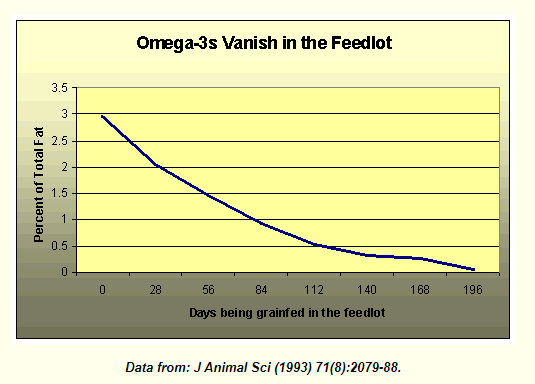


While this study measuring omega-3 levels is almost 20 years old, the trend it illustrates is upheld by current research. The other two images here are from studies over the years which add to the growing body of research showing nutrient differences and vitamin content between grain-fed and grass-fed animals.
Do grass fed foods have less omega-6 fatty acids? Why is this good or bad if so?
Science supports no significant change to the overall concentration of omega-6 fatty acids between feeding regimens (those allowed to graze on grass vs. feed). However, since grass-fed beef consistently shows a higher concentration of omega-3 fatty acids as compared to grain-fed contemporaries, it creates a more favorable omega-6 to omega-3 ratio(6,7). The importance of this ratio is summarized well by the following quote:
“A healthy diet should consist of roughly one to four times more omega-6 fatty acids than omega-3 fatty acids. The typical American diet tends to contain 11 to 30 times more omega -6 fatty acids than omega -3, a phenomenon that has been hypothesized as a significant factor in the rising rate of inflammatory disorders in the United States”(6).
While the data does not show a clear food safety advantage to grass-fed products over conventional products, the differences in quality and nutrient density of the meat itself show that based on quality standards, it is likely that grass-fed products will have a higher nutrient quality than grain-fed counterparts(8).
The health of the animal and the health of your food

When delving into the science behind grass-fed and grain-fed animals, it is almost disturbing to see what grain-fed animals experience.
“Liver abscess disease was the main cause of loss in grain-fed cattle”(9).
The liver is the organ of the body (both human and animal) that plays a major role in removing waste products as well as using protein to improve fat metabolism. If the livers of our grain-fed food are failing, what does that indicate about our food, and ultimately, how can it affect our health as humans consuming these products?
Research investigating exactly those questions is ongoing, but data on the results of aggressive grain-feeding programs have produced the following information(10):
What are grain fed feeds made of?
Feed grains can be composed of barley, grain sorghum, rye, corn, oats, wheat, forage and hay, and rice(11). These feeds are generally treated with antibiotics, and are used primarily for beef and dairy cows (10, 12).
How does the grain-feed cause disease?
The liver abscesses are bacterial infections associated with animals on aggressive grain-feeding diets (11). The infection causes damage to the cow’s stomach and allows disease causing bacteria to pass out of the stomach and onto the liver, where abscesses form, indicating a progression of disease state in the animal (12). In my experience seeing pediatric patients with fatty liver disease, a large contributing factor is a diet high in processed grains and sweets (both of these break down to sugar ultimately in the body). I am curious to know if there are more similarities than we know between animals and humans on diets composed primarily of processed grains/sugar and health outcomes.
What about “grass-fed” dairy?
Studies show that (certain conditions allowing) dairy products from grass-fed animals can improve the milk’s fatty acid profile (13). Grass-based diets have been shown to enhance precursors of fatty acids and vitamins with antioxidant properties, both of which are crucial to a healthy diet and lowering risk of disease (6).
Pasture Raised and Free Range
The following quote sums up the effect of pasture-raised animals well: “…the animal’s diet remains a key mechanism by which its nutrition and processing characteristics can be altered. Pasture feeding has been demonstrated to have a positive impact on the nutrient profile of milk, increasing the content of some beneficial nutrients” (14). In the case of hens, however, those raised in pasture can naturally obtain varying levels of nutrition as their forage time can be variable. Most hens require supplementation to make their diet complete. Their feed may be fortified, for example, with protein, vitamins, and/or minerals so that they can produce good quality eggs with more desirable characteristics(15).
As opposed to pastures with few plant species and feedlots, health is enhanced when animals graze phytochemically rich mixtures of grasses, forbs, shrubs, and trees. Diverse plant communities are nutrition centers and pharmacies that enable health…” (16).
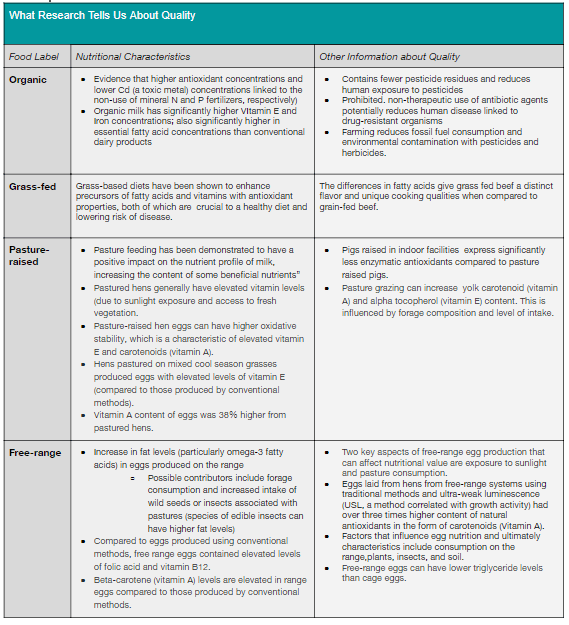
Summary of Nutrient Quality Comparisons
Click here to download the FREE pdf version of the following chart.
Chart based upon references listed at end of article (13-28).

Learn more about this topic
in The Link Between Food & Antibiotic Resistance.
Resources
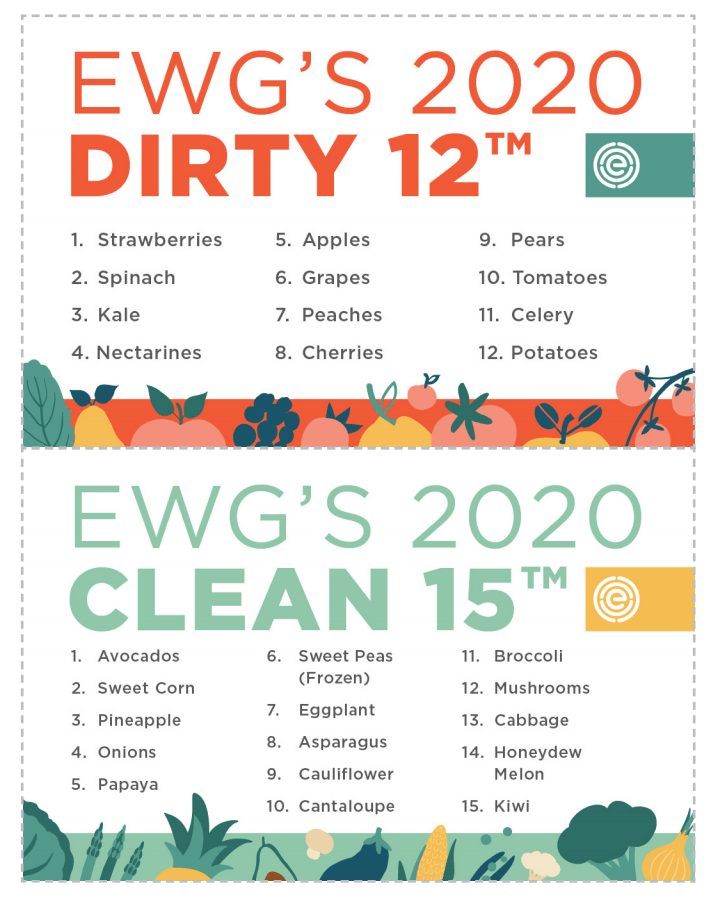
One guide that can help you is the Environmental Working Group’s “Dirty 12” List, which lists the 12 crops that farmers typically use the most pesticides on, and the “Clean 15” List, which lists the 15 crops that farmers typically use the least pesticides on. This can be a budgeting tool since it can help you to prioritize purchasing organic when it comes to the produce listed in the “Dirty 12” List while having peace of mind purchasing non-organic regarding the “Clean 15”, since they may not absorb as many pesticides.
Access the pdf version of the EWG’s lists by clicking here.
You can read or review Part 1 (Organic, Grass Fed, and Free Range: What Do They Mean?) by clicking here. Keep a lookout Part 3: Label Deciphering and Take Home Resources, coming soon!
REFERENCES
- Schwendel BH, Morel PC, Wester TJ, et al. Fatty acid profile differs between organic and conventionally produced cow milk independent of season or milking time. J Dairy Sci. 2015;98(3):1411‐1425. doi:10.3168/jds.2014-8322.
- Curl CL, Porter J, Penwell I, Phinney R, Ospina M, Calafat AM. Effect of a 24-week randomized trial of an organic produce intervention on pyrethroid and organophosphate pesticide exposure among pregnant women. Environment International. 2019:132. https://doi.org/10.1016/j.envint.2019.104957.
- Welsh JA, Braun H, Brown N, et al. Production-related contaminants (pesticides, antibiotics and hormones) in organic and conventionally produced milk samples sold in the USA. Public Health Nutrition. 2019;22(16):2972-2980. doi:10.1017/S136898001900106X
- McAfee AJ, McSorley EM, Cuskelly GJ, et al. Red meat from animals offered a grass diet increases plasma and platelet n-3 PUFA in healthy consumers. Br J Nutr. 2011;105(1):80‐89. doi:10.1017/S0007114510003090
- de Roos B, Mavrommatis Y, Brouwer IA. Long-chain n-3 polyunsaturated fatty acids: new insights into mechanisms relating to inflammation and coronary heart disease. Br J Pharmacol. 2009;158(2):413‐428. doi:10.1111/j.1476-5381.2009.00189.x
- Daley CA, Abbott A, Doyle PS, Nader GA, Larson S. A review of fatty acid profiles and antioxidant content in grass-fed and grain-fed beef. Nutr J. 2010;9:10. Published 2010 Mar 10. doi:10.1186/1475-2891-9-10
- Wood JD, Richardson RI, Nute GR, et al. Effects of fatty acids on meat quality: a review. Meat Sci. 2004;66(1):21‐32. doi:10.1016/S0309-1740(03)00022-6
- Zhang J, Wall SK, Xu L, Ebner PD. Contamination rates and antimicrobial resistance in bacteria isolated from “grass-fed” labeled beef products. Foodborne Pathog Dis. 2010;7(11):1331‐1336. doi:10.1089/fpd.2010.0562
- Roberts JL. The prevalence and economic significance of liver disorders and contamination in grain-fed and grass-fed cattle. Aust Vet J. 1982;59(5):129‐132. doi:10.1111/j.1751-0813.1982.tb02756.x
- Nagaraja TG, Chengappa MM. Liver abscesses in feedlot cattle: a review. J Anim Sci. 1998;76(1):287‐298. doi:10.2527/1998.761287x
- Foreign Agricultural Service. Grain and Feed. USDA. 2020. Accessed at https://www.fas.usda.gov/commodities/grain-and-feed.
- Amachawadi RG, Nagaraja TG. Liver abscesses in cattle: A review of incidence in Holsteins and of bacteriology and vaccine approaches to control in feedlot cattle. J Anim Sci. 2016;94(4):1620‐1632. doi:10.2527/jas.2015-0261
- Morales-Almaráz E, Soldado A, González A, et al. Improving the fatty acid profile of dairy cow milk by combining grazing with feeding of total mixed ration. J Dairy Res. 2010;77(2):225‐230. doi:10.1017/S002202991000004X
- Alothman M, Hogan SA, Hennessy D, et al. The “Grass-Fed” Milk Story: Understanding the Impact of Pasture Feeding on the Composition and Quality of Bovine Milk. Foods. 2019;8(8):350. Published 2019 Aug 17. doi:10.3390/foods8080350
- Newberry RC. Chapter 9-Commercial Free-Range Egg Production Practices. Egg Innovations and Strategies for Improvements. Academic Press. 2017;89-102. https://doi.org/10.1016/B978-0-12-800879-9.00009-3
- Provenza FD, Kronberg SL, Gregorini P. Is Grassfed Meat and Dairy Better for Human and Environmental Health?. Front Nutr. 2019;6:26. Published 2019 Mar 19. doi:10.3389/fnut.2019.00026
- Ward NE. Chapter 20-Vitamins in Eggs. Egg Innovations and Strategies for Improvements. Academic Press. 2017; 207-220. https://doi.org/10.1016/B978-0-12-800879-9.00020-2
- Anderson KE. Comparison of fatty acid, cholesterol, and vitamin A and E composition in eggs from hens housed in conventional cage and range production facilities. Poultry Science. 2011:90;1600-1608. doi: 10.3382/ps.2010-01289.
- Gałązka IC, Korzeniewska E, Czarnecki A, Sójka M, Kiełbasa P, Dróżdź T. Evaluation of Quality of Eggs from Hens Kept in Caged and Free-Range Systems Using Traditional Methods and Ultra-Weak Luminescence. Appl. Sci. 2019:9;2430. doi: https://doi.org/10.3390/app9122430
- Waterman JT, McClendon CJ, Ranabhat RS, Barton KT. Profiling of cell stress proteins reveals decreased expression of enzymatic antioxidants in tracheal epithelial tissue of pigs raised indoors. Am J Transl Res. 2019;11(9):5716‐5727. Published 2019 Sep 15.
- Smith-Spangler C, Brandeau ML, Hunter GE, et al. Are organic foods safer or healthier than conventional alternatives?: a systematic review [published correction appears in Ann Intern Med. 2012 Nov 6;157(9):680] [published correction appears in Ann Intern Med. 2012 Oct 2;157(7):532]. Ann Intern Med. 2012;157(5):348‐366. doi:10.7326/0003-4819-157-5-201209040-00007
- Vigar, V.; Myers, S.; Oliver, C.; Arellano, J.; Robinson, S.; Leifert, C. A Systematic Review of Organic Versus Conventional Food Consumption: Is There a Measurable Benefit on Human Health? Nutrients 2020, 12, 7.
- Barański M, Srednicka-Tober D, Volakakis N, et al. Higher antioxidant and lower cadmium concentrations and lower incidence of pesticide residues in organically grown crops: a systematic literature review and meta-analyses. Br J Nutr. 2014;112(5):794‐811. doi:10.1017/S0007114514001366
- Średnicka-Tober D, Barański M, Seal CJ, et al. Higher PUFA and n-3 PUFA, conjugated linoleic acid, α-tocopherol and iron, but lower iodine and selenium concentrations in organic milk: a systematic literature review and meta- and redundancy analyses. Br J Nutr. 2016;115(6):1043‐1060.
- Palupi E, Jayanegara A, Ploeger A, Kahl J. Comparison of nutritional quality between conventional and organic dairy products: a meta-analysis. J Sci Food Agric. 2012;92(14):2774‐2781. doi:10.1002/jsfa.5639
- Anderson KE. Comparison of fatty acid, cholesterol, and vitamin A and E composition in eggs from hens housed in conventional cage and range production facilities. Poult Sci. 2011;90(7):1600‐1608. doi:10.3382/ps.2010-01289
- Vikram A, Rovira P, Agga GE, et al. Impact of “Raised without Antibiotics” Beef Cattle Production Practices on Occurrences of Antimicrobial Resistance. Appl Environ Microbiol. 2017;83(22):e01682-17. Published 2017 Oct 31. doi:10.1128/AEM.01682-17
- Bernacchia R, Preti R, Vinci G. Organic and conventional foods: Differences in nutrients. Ital J Food Sci. 2016:28;565-578

Hi! I'm Kim Braly, RD, a clinical researcher and IBD Nutrition Consultant. I specialize in cutting-edge dietary therapies for inflammatory bowel disease that have been shown in multicenter trials to decrease inflammation, alleviate IBD symptoms and induce remission. I'm passionate about offering this effective new option to patients and their families with my 3D-Dietary™ Approach for IBD and helping to usher in a new era of IBD treatment through mentoring and research trial consultation. Let's see what diet can do for you.
ABOUT


FOR PATIENTS
Flares Happen!
You can't always put your life on hold when IBD rears its head, but you can make this your easiest flare yet. My proven diet and lifestyle tips support your gut, body, mind & emotions for a faster recovery and a longer remission.
FOR PARENTS
Is Your Child’s Weight Dropping Fast?
You don't have to stand helpless during an IBD flare. Feed your child foods proven to minimize triggers, calm inflammation, and repair the gut. Get them healing and growing!