

Diet, Immunity and the Microbiome: What you need to know about IBD and gut health.


Diet, Immunity and the Microbiome: What you need to know about IBD and Gut Health.
Have you heard of the gut microbiome? It continues to be a hot topic amongst researchers and the public. This term is used to describe the community of microorganisms living in the gastrointestinal (GI) tract. The gut microbiota have many jobs including development of one’s immune system, digestion, nutrition, metabolism, and protecting against invaders that can cause disease. About 70% of our immune system is located in the gut. So, it makes sense that when gut health is compromised, immunity can be as well.
How does IBD impact gut health and immunity?
This is a loaded question that has yet to be fully answered.
The exact cause of inflammatory bowel disease is inconclusive. But, we do know that genetics, the immune system, and the environment — including diet — can be contributing factors. This sounds complex, right? That is because it is!
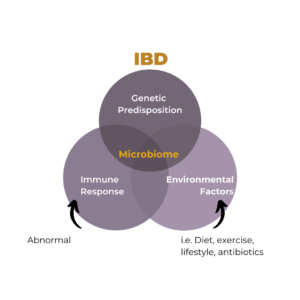
One’s health relies on a delicate balance between the immune system and microbiome. With IBD, the immune system responds abnormally and instead of providing protection it begins to attack the GI tract leading to inflammation and impacting the microbiome. The delicate balance is now off.
We know that the foods we eat and other lifestyle factors directly influence the health of the microbiome. If you carry the diagnosis of a chronic GI illness (such as IBD), working with a gut health dietitian can be helpful in supporting the microbiome and navigating the complexities of this disease.
Factors That Impact the Gut Microbiome and Immune System
The functioning of the gut microbiota can be broadly grouped into three categories:
- Nutrition and metabolism (i.e. energy homeostasis and nutrient absorption)
- Protection (against invaders, overgrowth of specific species)
- Trophic functions (i.e. gut epithelial cell fortification, regulation of the immune system)
Given the delicate balance or homeostasis needed for a healthy microbiome, disruption can lead to complications such as impaired immunity and/or autoimmunity such as inflammatory bowel disease.
There are many factors that go into maintaining a healthy immune system. Diet is important, of course, but so are regular routines like sleep hygiene, exercise, and stress management. Striving for balance in all areas of health is key to fortifying both your gut and your immune system.
Diet
In terms of diet, foods like fruits and vegetables provide antioxidants. Antioxidants are compounds in food that help prevent stress and damage to the body. To support immune health, aim to eat 5-7 servings of fruits and veggies each day.
Stress Management
In practice, we frequently observe an increase in IBD flares amongst pediatric patients after starting school in the fall. There are many factors that could play into this, stress being one of them. A recent study found just this – that stress triggers IBD flares in both children and adults.
Clinical evidence suggests that anxiety, depression, and stress can be linked back to what is going on in the gut. In fact, another publication looking into intestinal inflammatory relapses has called IBD “a stressed gut feeling.” Many studies urge patients and practitioners alike to understand the therapeutic impact of stress and encourage skills to better manage it. A mental health counselor is key here, although many patients do not have access to one, or are not given this information when diagnosed with IBD.
Medications
Like food, the medications you take can also influence how you feel and how your gut functions, and vice versa. The activity of drugs once they enter the body is often dictated by the health of the gastrointestinal tract. In other words, the gut microbiome affects how medication is metabolized. To complicate matters, multiple drugs may cause multiple reactions in the microbiome. Insight into the area of drug-microbiome interaction is needed for IBD.
Both disease state and drug therapies can affect how vitamins are metabolized and absorbed. Consult your GI team for specific nutrient or supplement recommendations based on your therapy regimen.
Environment
Environmental factors play a key role in IBD development and the course of disease. Route of delivery at birth, means of feeding during infancy, and maternal nutrition are just a few of the many factors that go into the establishment of one’s gut microbiota early on. Childhood weight, household size and lifestyle, tobacco use, and alcohol consumption have all been studied in relation to IBD and gut health.
What Can I Do To Improve My Microbiome?
Nutrition is a key part in maintaining a diverse microbiome. Eating patterns that focus on a diverse range of whole foods can help to support a healthy body with or without a diagnosis of IBD. You may be thinking “but my doctor has told me to avoid fiber.” Many patients that I see mention this, but growing literature highlights the importance of a whole-food based diet to broaden the diversity of the microbiome. There are ways to tailor diet to fit your individual needs. In some specific cases, avoiding certain foods may be indicated – always consult your GI team but it is important to do your own research as well.
Diversity Is Key
In general, the more diverse bacteria you have, the better. An increased diversity in the microbiome of the GI tract can —believe it or not— directly influence how the immune system performs.
Diversity of diet goes hand in hand with a diverse microbiome. However, to those with IBD, this might seem like a challenge since the typical diet advice is to increase complex carbohydrates and fiber for the benefit of gut bacteria. Diet can be a player in both the development of IBD and in combating the inflammation. Therapeutic diets emphasize anti-inflammatory foods and foods thought to impact the microbiome in a beneficial way, while avoiding other food components that may be pro-inflammatory or destructive to a healthy microbiome.
The following foods or components in foods are associated with positive changes in the microbiome and immune system.
Probiotics
Probiotics are microorganisms that, when administered in adequate amounts, offer a health benefit to the host and are typically administered via a supplement or in foods. They are often referred to as “live and active cultures” on a food label. They contribute to the count of beneficial bacteria living in your gut. They are thought to boost immunity and GI health as a functional food component. Functional foods can provide health benefits beyond their basic nutrition that may impact chronic disease.
When choosing foods with “live and active cultures,” look for options without additives and added sugars. Foods containing live and active cultures are typically fermented and include:
- Yogurt
- Kimchi
- Miso
- Sauerkraut
- Kefir
- Kombucha
Prebiotics
Like probiotics, prebiotics are food components that are essential for gut health. Prebiotics are a type of fiber that the body can’t digest. Instead, they serve as a food source for the gut’s bacteria and other microbes which in turn stimulate growth of health-promoting species of bacteria and produce short-chain fatty acids.
Food sources of prebiotics include but are not limited to:
- Bananas
- Apples
- Onions
- Garlic
- Leeks
- Asparagus
- Artichokes
- Beans and other legumes
- Whole grains such as amaranth, barley, buckwheat, corn/maize, quinoa, teff, wheat bran, oats
Prioritize Whole Foods
While clear nutrition guidelines are lacking for patients with IBD, there is a growing body of interest and research in IBD nutrition. Studies have shown a lower risk of Crohn’s Disease among populations consuming a Mediterranean modeled dietary pattern which emphasizes whole foods such as fruits and vegetables, whole grains, legumes, fish and monounsaturated fats, like olive oil. Simply, whole foods include those that are not processed and free of food additives, refined sugar or modifications. Whole foods offer nutrients needed to boost immunity like vitamins A, C, and E and offer other beneficial food components such as phytonutrients, antioxidants, fiber and more.
Minimize intake of prepackaged foods that contain food additives, including dyes, colors, added sugars, artificial sweeteners and flavorings. Certain food additives are linked to increased risk of colitis in IBD predisposed mice. For more on food additives and IBD, check out my in-depth article here.
The Western Diet is associated with increased intake of sugar, highly processed foods, and saturated fats with low intake of whole foods. High dietary sugar intake has been found to drive changes in the microbiota of mice by decreasing bacterial diversity and increasing abundance of pro-inflammatory bacteria. More research on added sugar and the human microbiome in IBD patients is needed.
In 2020 an international organization produced nutrition recommendations for patients with IBD regarding dietary components to increase or decrease. You can find these recommendations here.
Lifestyle Factors
Avoiding alcohol or moderating consumption can greatly improve symptom control for those with IBD. Research demonstrates that, alcohol is shown to:
- Alter the microbiome
- Disrupt intestinal barriers
- Increase intestinal permeability
- Promote immune activation
Similarly, tobacco cessation is one of the key environmental factors that has beneficial impacts in Crohn’s Disease.
Movement
The health benefits of daily movement are vast, ranging from hormone production to disease prevention, and of course, positive impacts on the microbiome. Small studies show promise for IBD patients, with subjects maintaining remission after experiencing beneficial outcomes due to physical activity. Exercise can positively impact changes in the gut microbial composition via energy homeostasis, regulation and increasing bacteria diversity.
With activity in mind, many experts recommend working closely with a physical therapist if you have IBD. Especially for high-risk patients, tailoring physical activity to account for impairments such as deconditioning, fatigue, depression, or pain can make all the difference.
Sleep
We know sleep is a basic need for overall well-being and functioning. Many people with IBD report poor sleep quality which has been associated with increased risk for disease activity/inflammation. Sleep disturbance impacts the immune response and is associated with decreased microbial diversity in a study conducted on male patients without GI conditions.
With an estimated ⅔ of IBD patients suffering from sleep disturbance, it’s important to understand some key elements of a good night’s sleep. The amount of adequate sleep recommendations by age :
- Newborns (0-2 months)– 12 to 18 hours
- Infants (4-12 months)– 12 to 16 hours
- Toddlers (1-2 years)– 11 to 14 hours
- Preschoolers (3-5 years)– 10 to 13 hours
- School-age children (6-12 years)– 9 to 12 hours
- Teenagers (13-18 years)– 8 to 10 hours
- Adults (18+ years)– 7 to 9 hours
Up to preschool age, the amount of sleep accounted for can include naps. No matter your age, a sleep deficit is cumulative. According to the Sleep Foundation, even a change in 30-minutes or one hour can add up. Another reason adequate sleep is important is because growth hormone is released during sleep. This hormone is crucial for growing children.
There are many things that can be said about sleep, but for IBD, good sleep hygiene is key to supporting stress reduction and disease management.
Reducing Stress and Anxiety
Inflammation plays a role in the pathophysiology of mood disorders such as anxiety and depression. Various studies indicate an increase in anxiety or depression in IBD patients with active disease. The gut and brain are connected through what is called the gut-brain access, of which the microbiome is a key player. Some methods of reducing stress and anxiety include:
- A supportive community
- Mindful movements and eating
- Meditation, yoga, and/or breathing exercises
- Relaxation techniques
- Counseling
According to a recent study, a possibly surprising factor that may contribute to depression and anxiety in IBD patients is self-compassion. Mindfulness was also listed as a key method to successfully lower disease-related anxiety and stress.
The Take Home Message on Diet, IBD and Gut Health
The gut microbiome is complex with a growing body of research as it relates to IBD. Many factors impact the gut microbiota and diet and lifestyle changes can be overwhelming. It is important to be patient with yourself and practice self compassion. You may have heard that diet does not impact your disease. Do not be discouraged; this is changing and this article provides research highlighting the impacts of diet and other lifestyle factors that impact one’s gut health and overall functioning in a positive way.
A step can be to focus on one dietary or lifestyle aspect noted above that seems manageable to you. One change can impact the health of your microbiome, immunity, mood and cognitive functioning as well.
Do you need guidance from an IBD nutrition expert that is specific to you and your IBD? Check out my services and book your free 20-minute consultation today.
References:
- Cohen S. If you want to boost immunity, look to the gut. Connect.uclahealth.org. Published March 19, 2021.
- University of Bath. A gut feeling: Understanding how our gut microbiome communicates with our immune system. Sciencedaily.com. Published October 26, 2021.
- Aldars-García, L.; Marin, A.C.; Chaparro, M.; Gisbert, J.P. The Interplay between Immune System and Microbiota in Inflammatory Bowel Disease: A Narrative Review. Int J Mol Sci. 2021, 22, 3076. https://doi.org/10.3390/ ijms22063076
- Yue B, Luo X, Yu Z, Mani S, Wang Z, Dou W. Inflammatory Bowel Disease: A Potential Result from the Collusion between Gut Microbiota and Mucosal Immune System. Microorganisms. 2019;7(1):440.
- Zheng D, Liwinski T, Elinav E. Interaction between microbiota and immunity in health and disease. Cell Research. 2020;30:492-506.
- Audet MC. Beyond the neuro-immune interplay in depression: Could gut microbes be the missing link? Brain Behav Immun. 2021;16.
- Olmo BMG, Butler MJ, Barrientos RM. Evolution of the Human Diet and Its Impact on Gut Microbiota, Immune Responses, and Brain Health. Nutrients. 2021;13(1):196.
- Socha-Banasiak A, Pawłowska M, Czkwianianc E, Pierzynowska K. From Intrauterine to Extrauterine Life-The Role of Endogenous and Exogenous Factors in the Regulation of the Intestinal Microbiota Community and Gut Maturation in Early Life. Front Nutr. 2021;8:696966.
- Assimakopoulos S, Triantos C, Maroulis I, Gogos C. The Role of the Gut Barrier Function in Health and Disease. Gastroenterol Res Pract. 2018;11(4):261-263.
- Ellis E. How to Keep Your Immune System Healthy. Academy of Nutrition and Dietetics. 2021.
- Berding K, Carbia C, Cryan JF. Going with the grain: Fiber, cognition, and the microbiota-gut-brain-axis. Exp Biol Med. 2021;246(7):796-811.
- Sun Y, Li L, Xie R, Wang B, Jiang K, Cao H. Stress Triggers Flare of Inflammatory Bowel Disease in Children and Adults. Front Pediatr. 2019;7:432.
- Oligschlaegar Y, Yadati T, Houben T, Oliván CMC, Shiri-Sverdlov R. Inflammatory Bowel Disease: A Stressed “Gut/Feeling”. Cells. 2019;8(7):659.
- Walsh J, Griffin BT, Clarke G, Hyland NP. Drug-gut microbiota interactions: implications for neuropharmacology. Br J Pharmacol. 2018;175(24):4415-4429.
- Vila AV, College V, Sanna S, Sinha T, Imhann F, et al. Impact of commonly used drugs on the composition and metabolic function of the gut microbiota. Nat Commun. 2020;11:362.
- Sloot KW, Geertsema P, Riijkmans HC, Voskuil MD, Dullemen HM, et al. Environmental factors associated with biological use and surgery in inflammatory bowel disease. J Gastroenterol Hepatol. 2020;36(4):1022-1034.
- Lasconi C, Pahl MC, Cousminer DL, Doege CA, Chesi A, et al. Variant-to-Gene-Mapping Analyses Reveal a Role for the Hypothalamus in Genetic Susceptibility to Inflammatory Bowel Disease. Cell Mol Gastroenterol Hepatol. 2021;11(3):667-682.
- Ryma T, Samer A, Soufli I, Rafa H, Touil-Boukoffa C. Role of Probiotics and Their Metabolites in Inflammatory Bowel Diseases (IBDs). Gastroenterol Insights. 2021;12(1):56-66.
- Akutko K. Probiotics, Prebiotics and Synbiotics in Inflammatory Bowel Diseases. J Clin Med. 2021;10(11):2466.
- Klemm S. Prebiotics and Probiotics: Creating a Healthier You. Academy of Nutrition and Dietetics. 2021.
- Gropper S, Smith J, Groff J. Advanced Nutrition and Human Metabolism. 5th ed.Wadsworth Cengage Learning; 2009.
- Lewis J, et al. A Randomized Trial Comparing the Specific Carbohydrate Diet to a Mediterranean Diet in Adults with Crohn’s Disease. Gastroenterology. 2021;161(3):837-852.
- Olednizki B, Bucci V, Cawley C, Maldonado-Contreras A. A Whole Food, Anti-Inflammatory Diet Establishes a Beneficial Gut Microbiome In Inflammatory Bowel Disease Patients. Gastroenterology. 2021;160(3):S51.
- Satokari, R. High Intake of Sugar and the Balance between Pro- and Anti-Inflammatory Gut Bacteria. Nutrients. 2020;12(5): 1348.
- White BA, Ramos GP, Kane S. The Impact of Alcohol in Inflammatory Bowel Diseases. Inflamm Bowel Dis. 2021.
- Raman M, Rajagopalan V, Kaur S, Reimer RA, Ma C, et al. Physical Activity in Patients With Inflammatory Bowel Disease: A Narrative Review. Inflamm Bowel Dis. 2021.
- Monda V, et al. Exercise Modifies the Gut Microbiota with Positive Health Effects. Oxid Med Cell Longev. 2017;3831972.
- Ballesio A, Zagaria A, Baccini F, Micheli F, Nardo GD, et al. A meta-analysis on sleep quality in inflammatory bowel disease. Sleep Med Rev. 2021;60.
- Smith R, et al. Gut microbiome diversity is associated with sleep physiology in humans. PLoS One. 2019;14(10):e0222394.
- Barberio B, Zingone F, Savarino EV. Inflammatory Bowel Disease and Sleep Disturbance: As Usual, Quality Matters. Dig Dis Sci. 2021;66:3-4.
- Canakis A. Sleep and Fatigue in IBD: an Unrecognized but Important Extra-intestinal Manifestation. Curr Gastroenterol Rep. 2020;22(8).
- Ancona A, et al. The Gut-Brain Axis in Irritable Bowel Syndrome and Inflammatory Bowel Disease. Digestive and Liver Disease. 2021;53:298-30.
- Trindade IA, Sirois FM. The prospective effects of self-compassion on depressive symptoms, anxiety, and stress: A study in inflammatory bowel disease. J Psychosom Res. 2021; 146.

Hi! I'm Kim Braly, RD, a clinical researcher and IBD Nutrition Consultant. I specialize in cutting-edge dietary therapies for inflammatory bowel disease that have been shown in multicenter trials to decrease inflammation, alleviate IBD symptoms and induce remission. I'm passionate about offering this effective new option to patients and their families with my 3D-Dietary™ Approach for IBD and helping to usher in a new era of IBD treatment through mentoring and research trial consultation. Let's see what diet can do for you.
ABOUT


FOR PATIENTS
Flares Happen!
You can't always put your life on hold when IBD rears its head, but you can make this your easiest flare yet. My proven diet and lifestyle tips support your gut, body, mind & emotions for a faster recovery and a longer remission.
FOR PARENTS

Is Your Child’s Weight Dropping Fast?
You don't have to stand helpless during an IBD flare. Feed your child foods proven to minimize triggers, calm inflammation, and repair the gut. Get them healing and growing!